-
Introduction
-
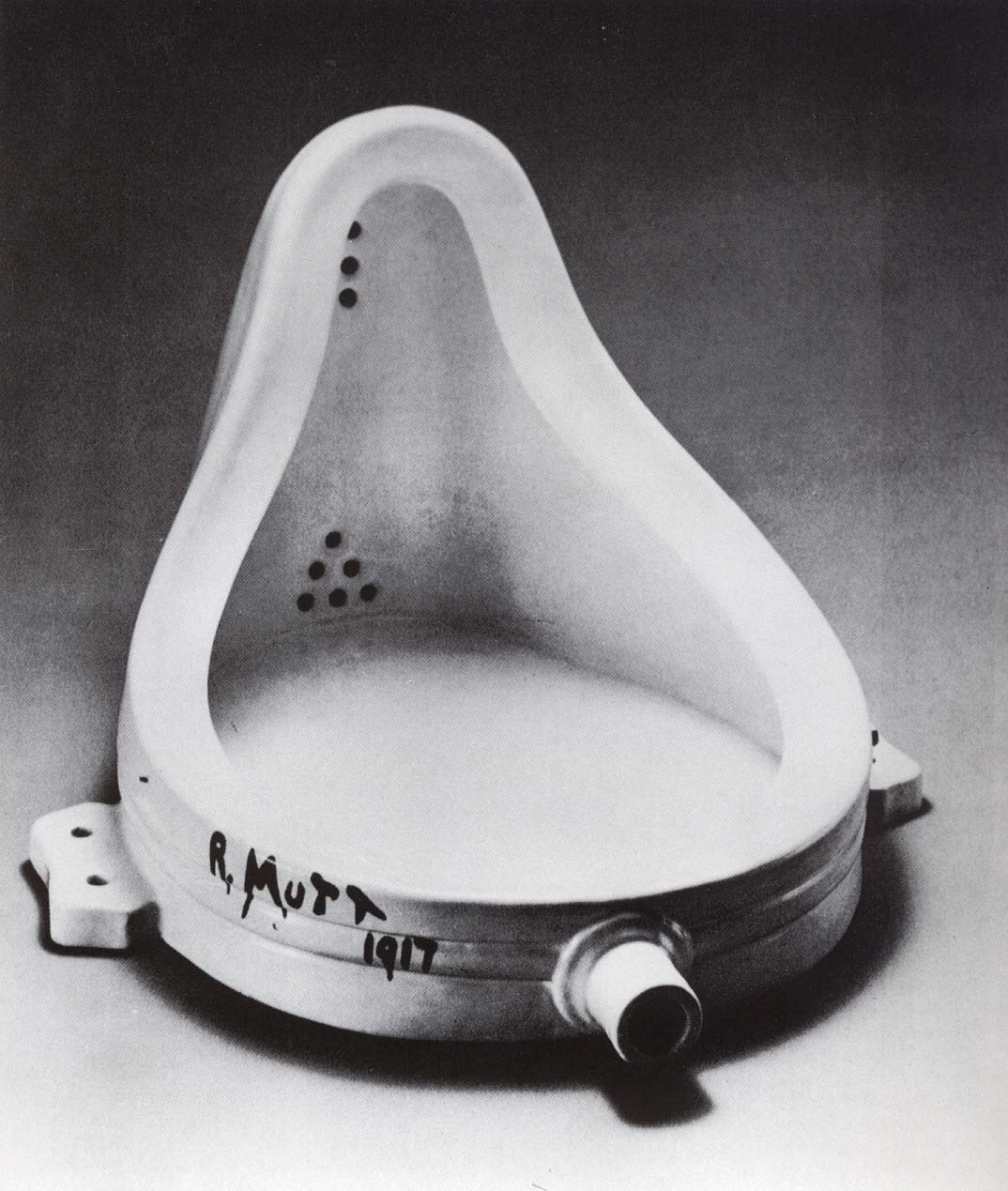 Fountain, 1917
Marcel Duchamp
Fountain, 1917
Marcel Duchamp
-
Peripheral Relations – A Guided Tour


-
Marcel Duchamp & New Zealand Art — An Introduction
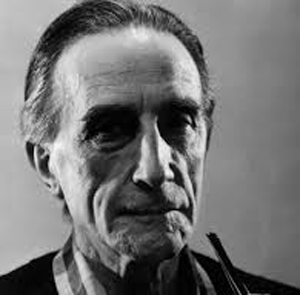
Marcel Duchamp
Tags
Date of Birth
1887, Normandy, France
Nationality
French, U.S. citizen since 1955
Bio
Marcel Duchamp (1887–1968) was born in Blainville, Normandy in the northern region of France, but sojourned through Europe and the United States for much of his career. Embracing itinerancy, Duchamp lived as an expatriate in New York and Buenos Aires, and was greatly influenced by a five-month trip to Munich in 1912. Duchamp left France during World War I (arriving in New York on June 15, 1915) to escape the stultifying Parisian atmosphere thathe believed threatened his artistic creativity
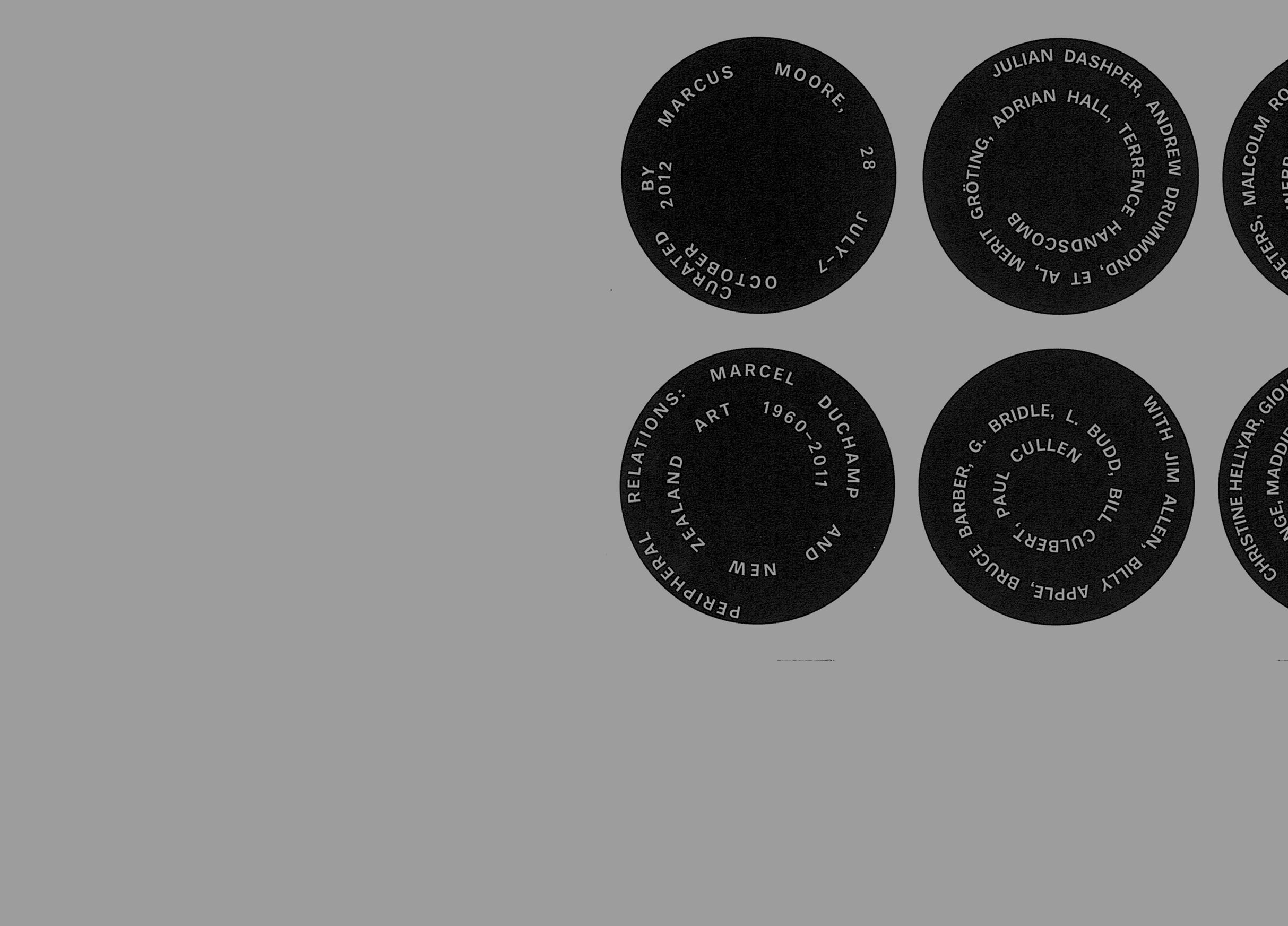
Marcel Duchamp’s (1887–1968) formidable influence on art of the 20th century is undeniable. What was or is his effect here in New Zealand? ‘Peripheral Relations: Marcel Duchamp and New Zealand Art 1960–2011’ offers various responses to this question. One is strictly historical. It brings to light the little- known fact that Duchamp’s works are held in New Zealand collections and a major exhibition of his works—one of the very earliest to survey his output—was presented here in 1967, and it explores actual instances when artists in New Zealand encountered Duchamp’s works or quoted him directly. Another is interpretive. It postulates relationships between Duchamp and selected New Zealand artists that are based on allusive readings of key themes in Duchamp’s practice. And finally, this exhibition speculates that New Zealand’s peripherality to the traditional centres of modern art can be used as a tool to understand Duchamp differently and specifically, and thus defines our own Duchampian ‘tradition’. Bringing together works by 30 artists produced since 1960, ‘Peripheral Relations’ explores a rich trajectory of practice that has turned away from what Duchamp called the “retinal”, to emphasise art is a mental act that in myriad ways evades the realm of pure aesthetics. As such it aims to both contribute to the formulation of New Zealand’s post-nationalist art history and to add to the sum of scholarship that tracks Duchamp’s impact worldwide. Bringing together works by 30 artists produced since 1960, ‘Peripheral Relations’ explores a rich trajectory of practice that has turned away from what Duchamp called the “retinal”, to emphasise art is a mental act that in myriad ways evades the realm of pure aesthetics. As such it aims to both contribute to the formulation of New Zealand’s post-nationalist art history and to add to the sum of scholarship that tracks Duchamp’s impact worldwide.
-
Marcel Duchamp & New Zealand Art — An Introduction
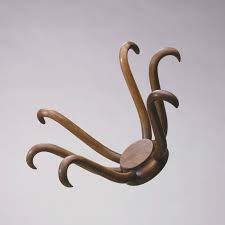
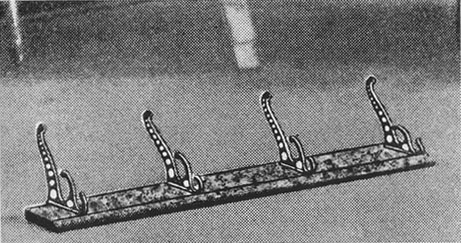
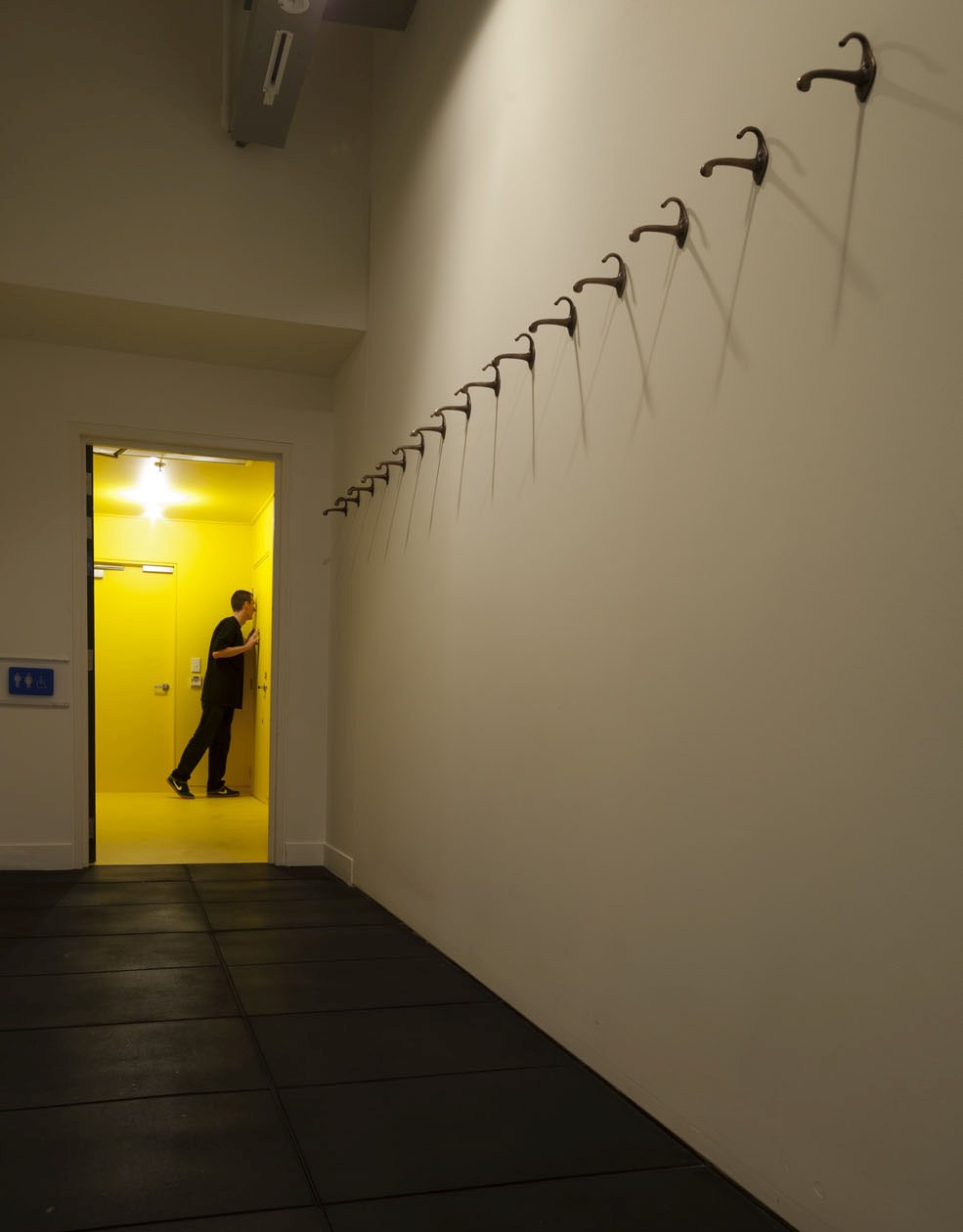
When Duchamp attached a bicycle wheel to a stool (denying its usual function yet allowing the wheel still to turn) and removed two of the stool’s leg- struts, he was testing the sculpture against the laws of gravity. Likewise, by altering the conventional direction of hooks in Hat Rack (1916) and Trebuchet (Trap) (1917), suspending readymades—Hat Rack, Fountain (1917) and In Advance of a Broken Arm (1915)—in the air, and documenting their shadows, as in Ombres portées (1918), Duchamp uses objects to instantiate a pseudo-science that unsettles our comprehension of dimensions and confounds gravity’s function.9 Such examples echo in ‘Peripheral Relations’, in the experimental structures and attendant notational drawings of Paul Cullen; in the balancing acts of Michael Parekowhai’s My Sister, My Self (2006) and Mike Stevenson’s The Only Optional Extra (2005); in the spinning circles and cast shadows of Len Lye’s Roundhead (1960–61), and in the crystalline orb that fractures light in g. bridle’s assisted readymade, black work (2011). Secondly, this exhibition draws out the statement that Duchamp’s readymades were made with movement and mobility in mind, or were conceived to travel and to “be looked for”,10 which in T.J. Demos’s terms are symptomatic of Duchamp’s expatriate status and his peripatetic lifestyle.11 Duchamp had to learn English after he left Paris and this process of acculturation is evident in his titles and inscriptions that play with the rules of English and French and exploit the punning power of homonyms. His constant ocean voyaging led him even to invent work that suited his shipboard situation. Sculpture for Travelling (1918), which accompanied him on his voyage from NewYork to Buenos Aires in 1918, was made out of rubber bathing caps that could be stowed in a suitcase to be removed and stretched to fit whatever space the artist found himself in. In such examples the readymade can be understood as a mobile form, one that can cross borders and change its meaning in relation to different contexts.
-
Marcel Duchamp & New Zealand Art — An Introduction
Frontispiece,1
Robert Lebel,
Marcel Duchamp
[1967]Te Papa
About
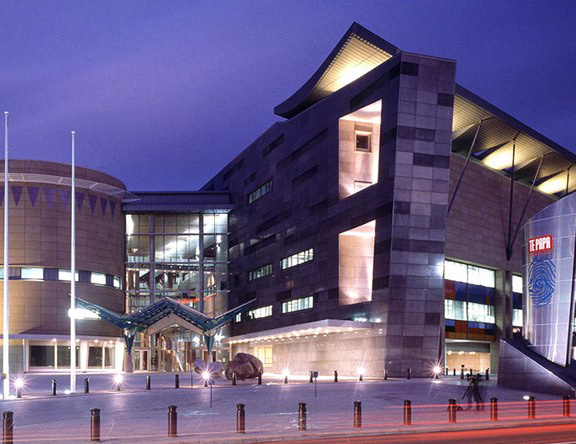
Te Papa is New Zealand’s national museum, renowned for being bicultural, scholarly, innovative, and fun. Our success is builton our relationships with and ability to represent our community. New Zealand’s geology and natural environment, and the stories of New Zealand’s indigenous people, the Maori, are celebrated in Te Papa’s permanent exhibitions. An exciting range of exhibitions display New Zealand’s diverse art and visual culture and top-rating international exhibitions tour regularly.
Our thanks go to Marcus for his original research, his valuable assistance with preparations for the show and his boundless enthusiasm for his subject. We are grateful to Massey University for awarding Marcus funding that has enabled the re-creation of works for this exhibition and provided invaluable support for aspects of its development. We have been vitally assisted by the Museum of New Zealand Te Papa Tongarewa, in facilitating the loan of works from the Isaacs’ Bequest and from its contemporary New Zealand art collections; by Christchurch Art Gallery, which has deftly adapted to its building’s closure to bring us works from its collection; the Sarjeant Gallery, the staff of which have been especially helpful, and by Auckland Art Gallery, the Len Lye Foundation, Govett-Brewster Art Gallery, Dunedin Public Art Gallery, the New Zealand Film Archive and Michael Lett. Special thanks are due to all the artists many of whom have gone out of their way to assist us, especially Paul Cullen, Adrian Hall and Roger Peters who have re-made works for the exhibition, and to the estates of L. Budd, Julian Dashper, Giovanni Intra, Darcy Lange and Malcolm Ross. In addition to Marcus Moore’s contribution to the exhibition I would like to personally thank John Finlay and Matt Plummer, both teaching fellows in Art History at Victoria, who have worked so assiduously on preparing texts on the artists and their works; their role reinforces the close relationship between